alternate between adding and subtracting consecutive square numbers
what happens?
does this continue?
this result is due to each square number being made up of consecutive triangular numbers:
this has parallels to summing sequences by the method of differences (or 'telescoping' a sequence)
median
don steward
mathematics teaching 10 ~ 16
don steward
mathematics teaching 10 ~ 16
Thursday, 27 February 2014
Wednesday, 26 February 2014
Tuesday, 25 February 2014
squares in squares
find relationships between the (integer) lengths of the squares
what is the smallest (integer) length of side of the big square?
Monday, 24 February 2014
expanding brackets: quadratic expressions
this can be achieved by involving some regularity (a pattern) to results or a general form/structure - that could lead on to proof considerations
as Dave Hewitt reminds us, stressing structure helps someone see generality quicker and more resiliently
it seems helpful for skill development to have some application, either:
- within maths (e.g. to more firmly establish a result) or
- within some practical context
by way of examples of 'tasks with depth' (not necessarily good ones...) here are some tasks involving work on expanding the product of two linear expressions
pairs or trios of results in the left-hand column are either identical or closely related - so reasons can be sought for this feature
the right-hand column involves the skill of expanding brackets leading to the justification of a result - which might better be initiated from numerical examples (e.g. questions 18 and 19 involving any four consecutive numbers)
the left-hand questions involve a middle term coefficient that is always 10 so students could try to create expressions with this property, maybe making them as complicated as they can
the right-hand questions are the difference of two squares and students could explore and offer a reason why the middle term always disappears
in section (a) the differences between pairs of expressions (questions (1) and (2) etc) is 6can students create their own examples and possibly give reasons for this 'gap'?
in section (b) the pairs of expressions are closely related
- can students create their own examples and consider some reasons why the expressions are so close?
for these questions, the result should either be a number or
a quadratic expression that factorises
can students create their own, similar, questions?
Friday, 21 February 2014
N rem R
choose two digits (e.g. 2 and 5)
something special happens for two consecutive numbers
what is it?
a proof of this property involves (for n and (n + 1)):
splitting the numerator into 2n^2 + n + (n + 1)
dividing by (2n + 1)
that gives n + (n + 1)/(2n + 1)
which is n rem (n + 1)
- divide the sum of their squares by their sum (i.e. (4 + 25) divided by 7 for the example)
- write this as a number and a remainder: (i.e. 29 / 7 = 4 rem 1)
something special happens for two consecutive numbers
what is it?
a proof of this property involves (for n and (n + 1)):
splitting the numerator into 2n^2 + n + (n + 1)
dividing by (2n + 1)
that gives n + (n + 1)/(2n + 1)
which is n rem (n + 1)
Wednesday, 19 February 2014
square symmetries (ii)
where does the fifth circle go so that there is a line of symmetry for the whole square?
and another solution?
there are two solutions for this one too
alternatively
students can seek their own arrangements that have two solutions
square symmetries (i)
these resources link with the fine task 'attractive tablecloths' developed by Charlie Gilderdale for Nrich
initially you could ask students to place 8 crosses on a 4 by 4 grid so that there is a symmetrical pattern for the overall square

students could be asked to produce e.g. three patterns using 8 crosses so that the whole square has just rotational symmetry, order 2 etc.
can they produce a pattern with just two lines of symmetry (i.e. not with rotational symmetry)?
can they produce a pattern just with rotational symmetry, order 4 (i.e. not with any lines of symmetry)?

describe the symmetries of these patterns for the whole 4 by 4 square
describe the symmetries of these patterns for the whole 5 by 5 square
the NRICH tasks develop this work to consider the maximum numbers of colours that can be used for patterns with various symmetries and for squares of different sizes - a clever link to well known sequences
NRICH provide a set of interactivities for 5 by 5 grids, that can be made whole screen
but... these use flash and may well be blocked in most (all) browsers
[flash player is due to be discontinued in 2020]
one line of symmetry
just rotational symmetry, order 4
two lines of symmetry, rotational symmetry, order 2
two diagonal lines and rotational symmetry, order 2
four lines of symmetry, rotational symmetry, order 4
even sized grids
initially you could ask students to place 8 crosses on a 4 by 4 grid so that there is a symmetrical pattern for the overall square

students could be asked to produce e.g. three patterns using 8 crosses so that the whole square has just rotational symmetry, order 2 etc.
can they produce a pattern with just two lines of symmetry (i.e. not with rotational symmetry)?
can they produce a pattern just with rotational symmetry, order 4 (i.e. not with any lines of symmetry)?

describe the symmetries of these patterns for the whole 4 by 4 square
describe the symmetries of these patterns for the whole 5 by 5 square
the NRICH tasks develop this work to consider the maximum numbers of colours that can be used for patterns with various symmetries and for squares of different sizes - a clever link to well known sequences
NRICH provide a set of interactivities for 5 by 5 grids, that can be made whole screen
but... these use flash and may well be blocked in most (all) browsers
[flash player is due to be discontinued in 2020]
one line of symmetry
just rotational symmetry, order 4
two lines of symmetry, rotational symmetry, order 2
two diagonal lines and rotational symmetry, order 2
four lines of symmetry, rotational symmetry, order 4
even sized grids
Monday, 17 February 2014
a five-reptile
what are the proportions for the lengths of sides of a right angled triangle if five of them (all congruent) make up a triangle similar to the original?
thanks to John Golden ('math hombre') for pointing out that this forms the basis of the aperiodic 'pinwheel' tiling by John Conway
digitizing rectangles
what are the areas and perimeters of these shapes?
what's a good way of counting them?
what patterns/relationships can be found?
what's a good way of counting them?
what patterns/relationships can be found?
Saturday, 15 February 2014
Friday, 14 February 2014
Thursday, 13 February 2014
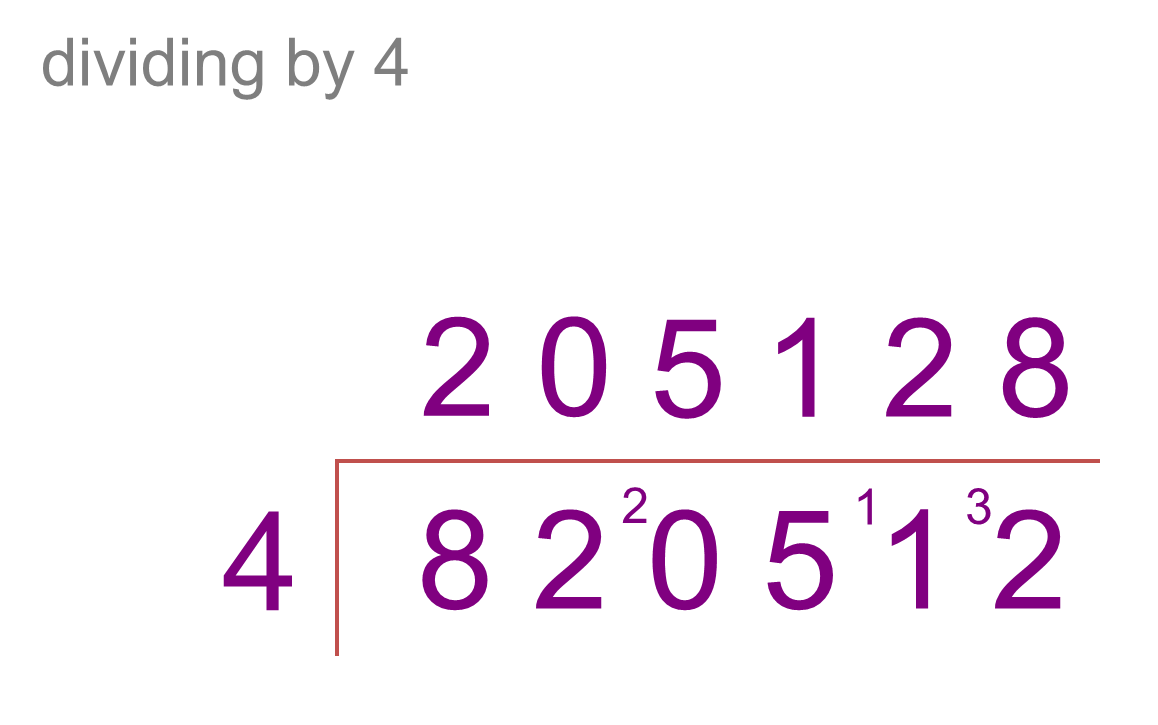
division by 4
divide 820512 by 4
what happens?
what happens if you divide 615384 by 4?
so, using this property for special numbers when dividing by 4,
can 6 digit special numbers be found that
start with the other digits?
[yes they can]
what happens?
what happens if you divide 615384 by 4?
so, using this property for special numbers when dividing by 4,
can 6 digit special numbers be found that
start with the other digits?
[yes they can]
Friday, 7 February 2014
Monday, 3 February 2014
grid loci
without needing to give out compasses...
students can plot the loci freehand
(the circle loci sometimes have two answers but only one of these is an integer pair)
Saturday, 1 February 2014
Subscribe to:
Posts (Atom)