a ppt is here
comparing probabilities, maybe helped by a sample space
[the variety of 1 to 4 dice shown here rolls better than a tetrahedron]
median
don steward
mathematics teaching 10 ~ 16
don steward
mathematics teaching 10 ~ 16
Showing posts with label probability sample space. Show all posts
Friday, 25 October 2019
Thursday, 8 March 2018
Saturday, 29 April 2017
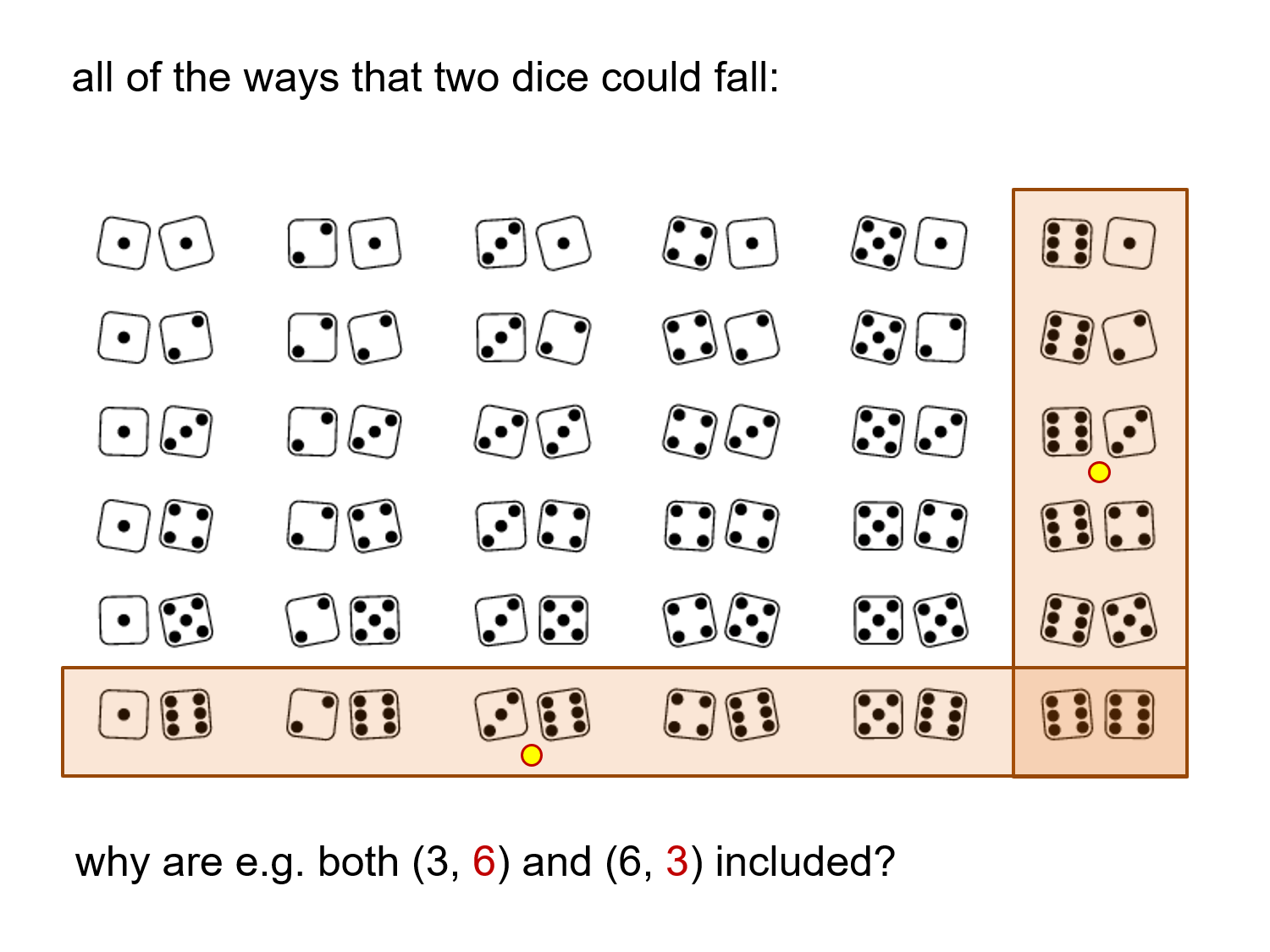
two dice and generalising
start off looking at how many times a 4, 5 or 6 is obtained on any or both of two dice
identify theoretical probabilities from a sample space
compare this with experimental data: student results that have been collected together
explore further, seeking/developing a general rule
the powerpoint
Friday, 28 April 2017
Tuesday, 18 March 2014
quirky dice
a ppt is here
there are several examples of three or more non-transitive dice
in the long run,
A beats B
B beats C
but A doesn't beat C...
links with Condorcet's paradox
and like 'rock - paper - scissors'
students can consider long term outcomes by entering 'A' or 'B' etc. in the sample space diagrams
there are several other varieties...
there are several examples of three or more non-transitive dice
in the long run,
A beats B
B beats C
but A doesn't beat C...
links with Condorcet's paradox
and like 'rock - paper - scissors'
students can consider long term outcomes by entering 'A' or 'B' etc. in the sample space diagrams
there are several other varieties...
Thursday, 2 January 2014
dibingo
a ppt is here
a slight variation of work on summing two dice
experimental work before theoratical
students selct one of the four cards (so it's helpful for them to play in groups of 4)
students may well select the bingo 'cards' with more numbers on them
as well as actually rolling two dice
the interactive from Shodor.org is good to use (as a class demonstration) because it keeps a tally of totals that have been generated (click on the dice icon and keep the number of throws at one)
but there are several other interactives on the net...
including typing 'roll a dice' into google and clicking one more 6 sided dice, to have two dice
or the teacherled one (click dice 3 because you do not want to use that)
a slight variation of work on summing two dice
experimental work before theoratical
students selct one of the four cards (so it's helpful for them to play in groups of 4)
students may well select the bingo 'cards' with more numbers on them
as well as actually rolling two dice
the interactive from Shodor.org is good to use (as a class demonstration) because it keeps a tally of totals that have been generated (click on the dice icon and keep the number of throws at one)
but there are several other interactives on the net...
including typing 'roll a dice' into google and clicking one more 6 sided dice, to have two dice
or the teacherled one (click dice 3 because you do not want to use that)
Subscribe to:
Posts (Atom)