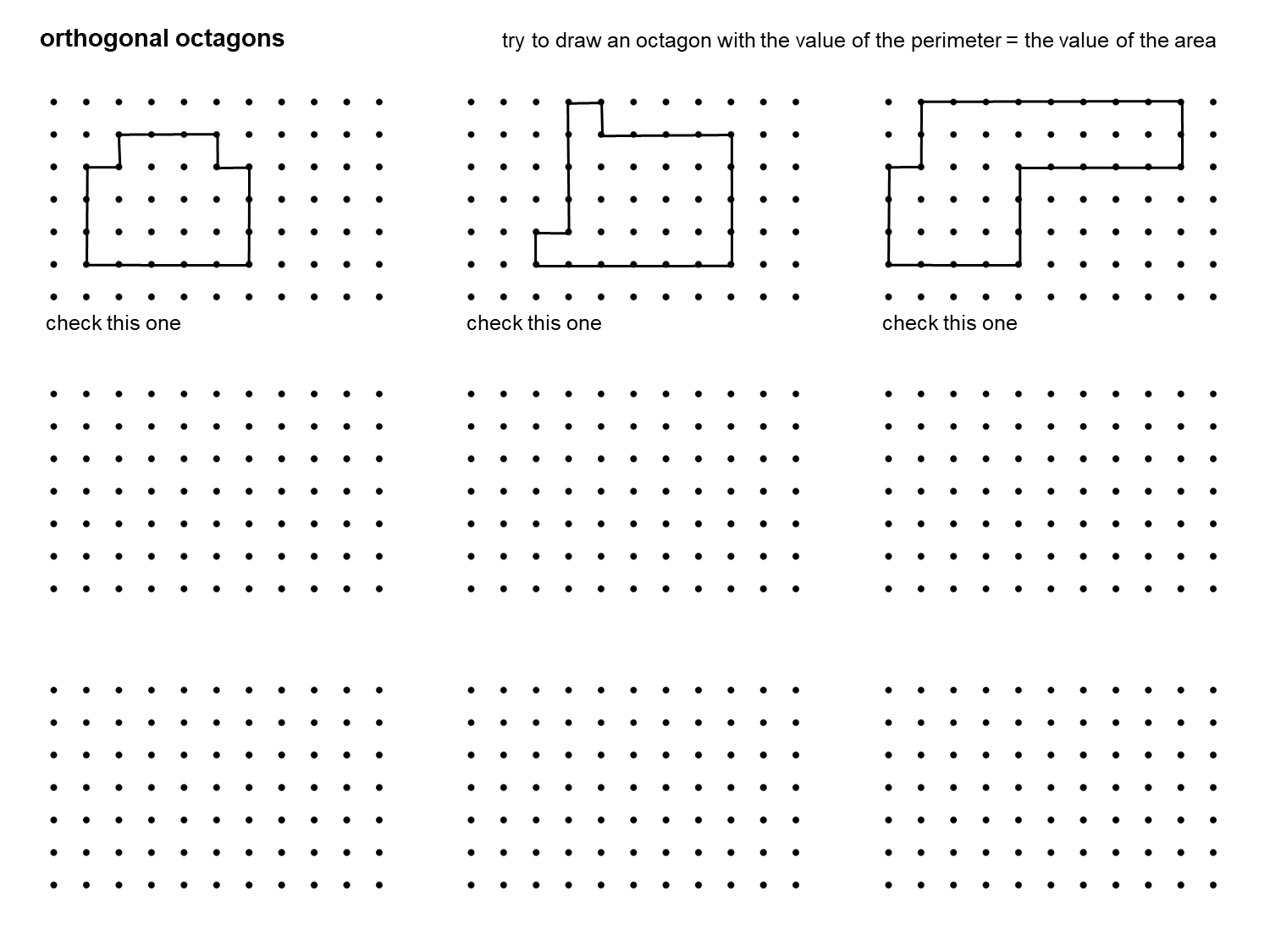
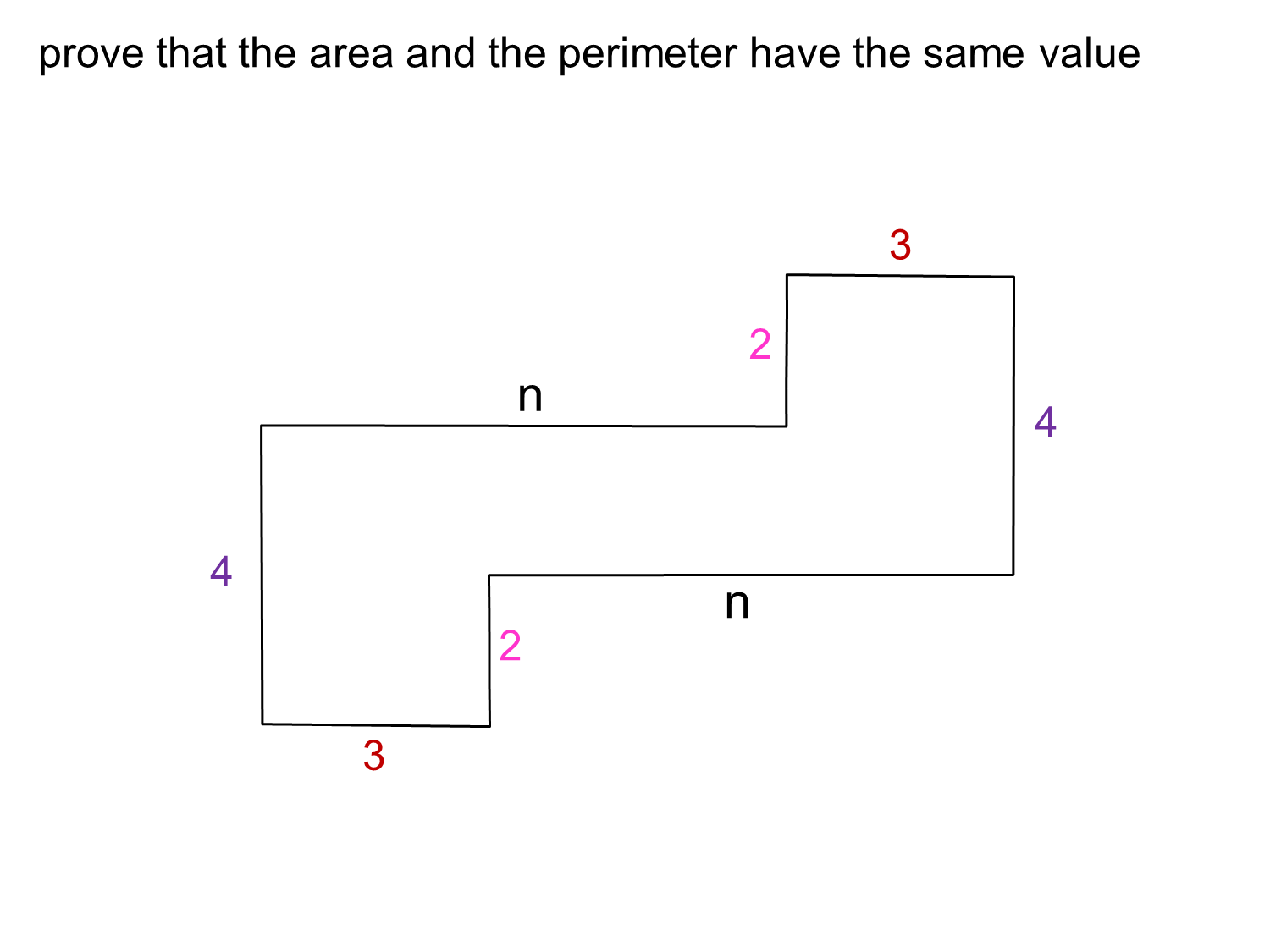
this task could be initiated by asking students to draw several rectangles on squared (or dotty) paper
they find the perimeter ('P' number) and area number ('A' number) (using the size of square provided as a unit)
then invite one of them out to let the class know the P and A numbers for one of their rectangles
the class try to work out the dimensions
etc.
discussions might focus on the two sizes of rectangles (including squares) for which P = A
and then for which A = 2P
finding examples that fit various relationships
linking P with A for various widths
continuing a pattern
providing reasons why rules work from a diagram
reasons can become difficult...
maybe focus attention on:
the four corners
the (non-corner) left and right edges
the lengths
plotting the rules for particular fixed widths
what are the intersection points?
forming and solving simultaneous equations in P and A
various hard questions....