median
don steward
mathematics teaching 10 ~ 16

Thursday, 8 September 2011

triangular number building blocks

(1) it is easy to show that a triangular number plus the next triangular number make a square number

(2) can students show that 8 of a triangular number plus 1 makes a square number? (a result credited to Plutarch (100CE))

the algebraic justification for this is reasonably straightforward
a diagram is probably more (immediately) compelling:


(3) can students show that a triangular number plus 6 times the next triangular number plus the next triangular number is a square number?
using a diagram?
using algebra?

(4) can students show with a diagram that 9 of a triangular number plus 1 makes another triangular number?

the algebraic justification for this is a little more demanding
however, there is a neat associated diagram:

Sunday, 4 September 2011

HCF and LCM problems


based on a KS2 SAT question


the following problems are slightly adapted from Ms Sia's Realm of Maths blog
many thanks for these


Friday, 2 September 2011

primes


a powerpoint is here

[thanks to Tandi Clausen-May and Jerome Bruner]


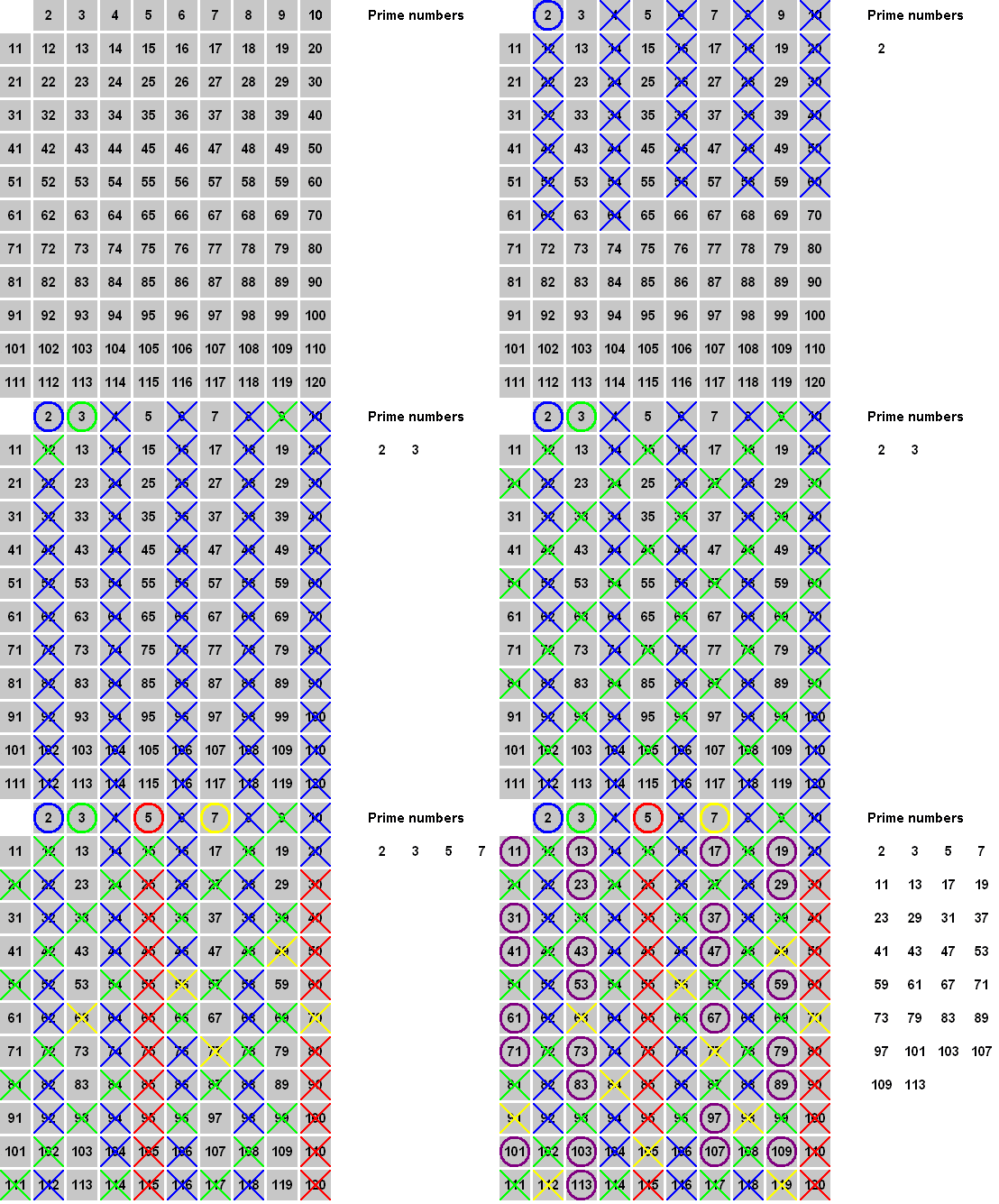
I'm not sure it is worthwhile for students to undertake a prime search by Eratosthenes' sieve method but it's good that there's an animated gif that does it for you...

these are Brent Yorgey's images (math less travelled) showing the sieve results for 1 to 100 and for 1 to 840


why all the parallel lines?


and a presentation by Visnos


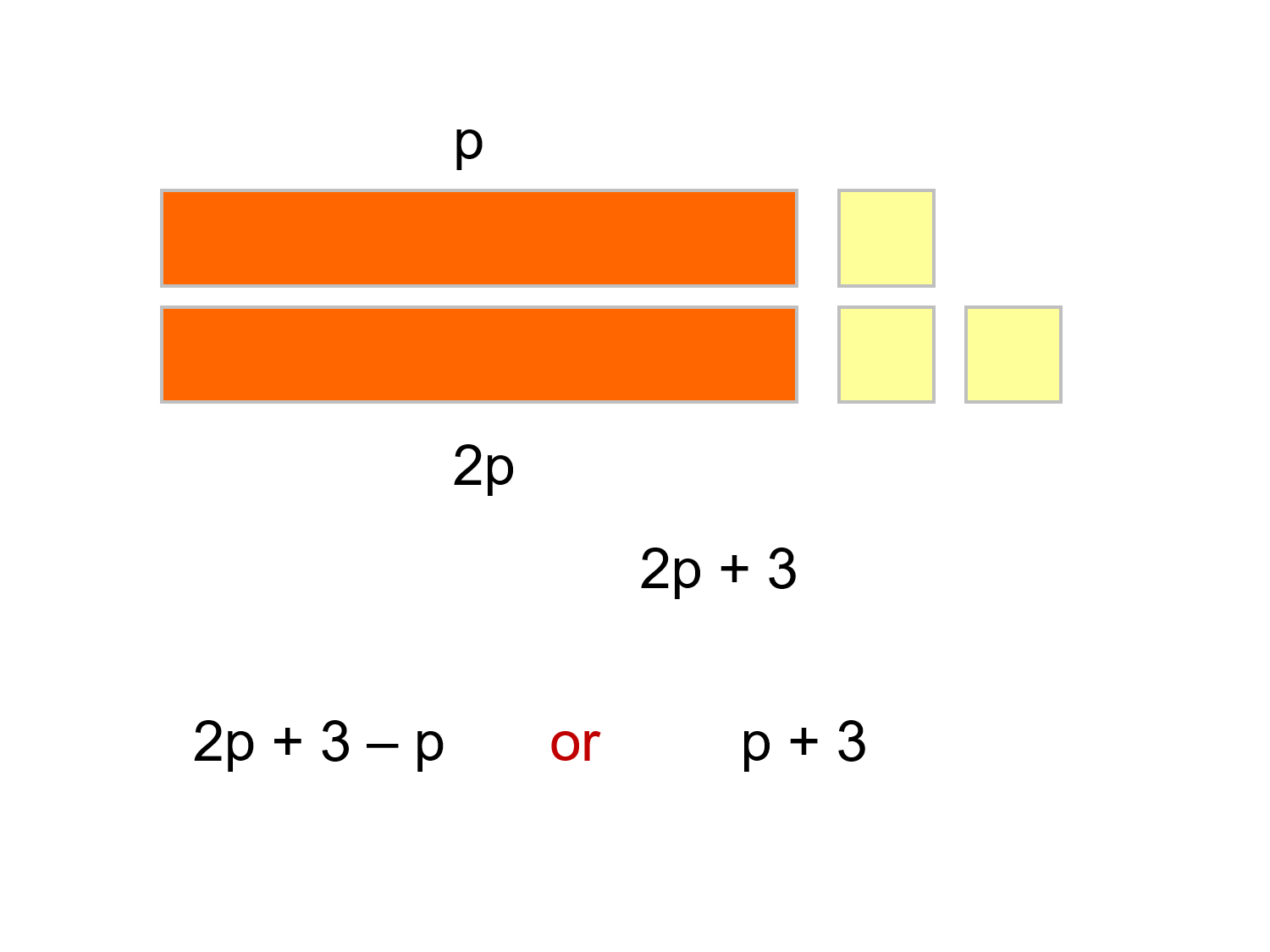
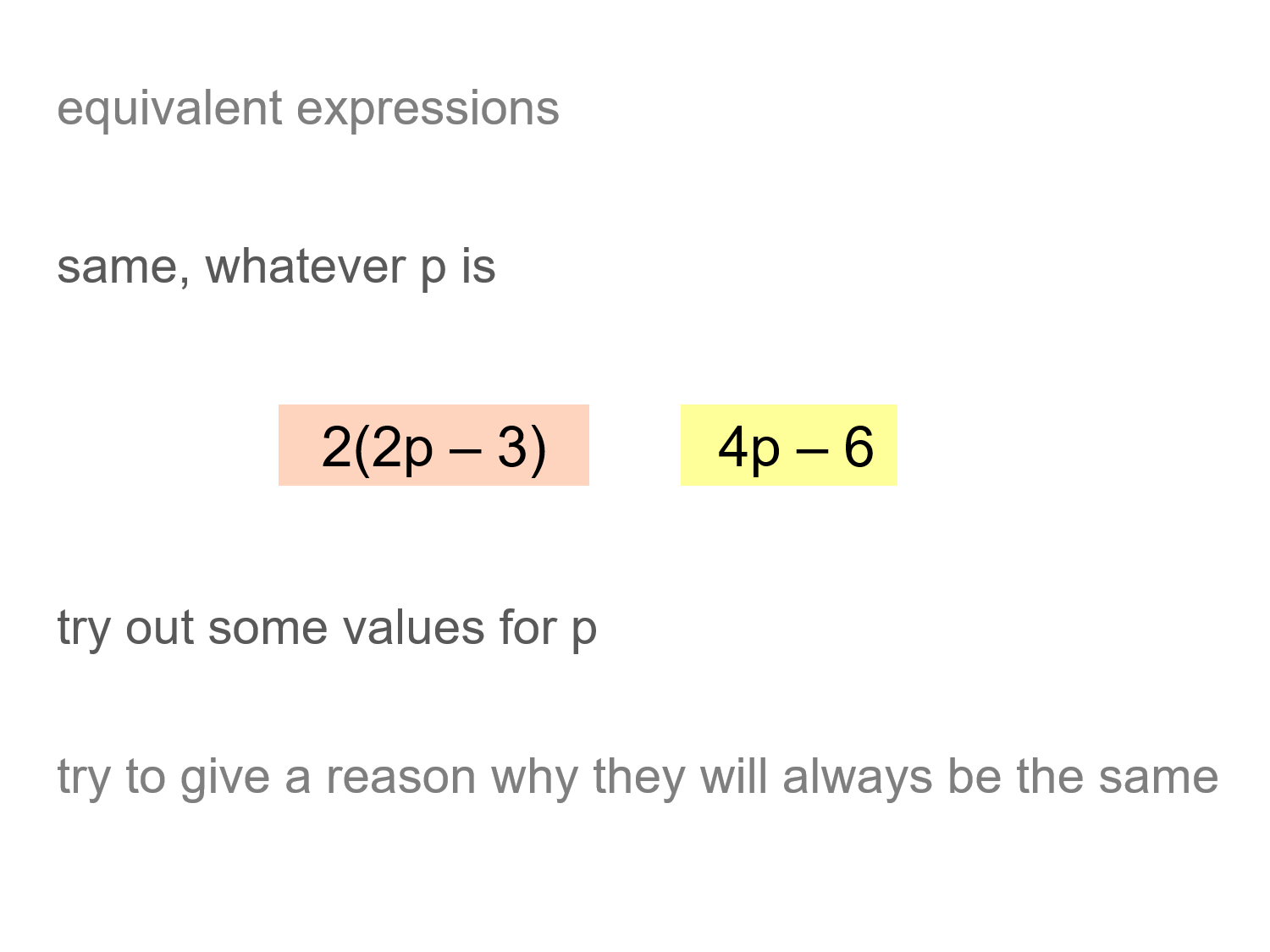
plank algebra

planks (length of) are a helpful image for an unknown in algebra
students can become familiar with diagrams for simpler expressions and equivalents

this work is intended to introduce bracketed expressions

a ppt is here


Thursday, 1 September 2011

remainders

what numbers have a remainder of 1 when they are divided by 3?

what numbers have a remainder of 1 when they are divided by 2 or by 5?


what is the smallest number so that:

when it is put into bunches of 3
there is 1 left over

when it is put into bunches of 5
there is 2 left over

when it is put into bunches of 7
there is 3 left over?


    there is a similar problem that was brought to my attention by David Wells, seemingly offered by Sun Tsu-Ching who worked on the Chinese remainder theorem (around the 4th century CE - I like the idea of students working on similar problems to their ancient ancestors):
    • when you divide a number by 3, the remainder is 2
    • when you divide it by 5, the remainder is 3
    • when you divide it by 7, the remainder is 2
    can students find the smallest and then the next biggest numbers?

      Monday, 29 August 2011

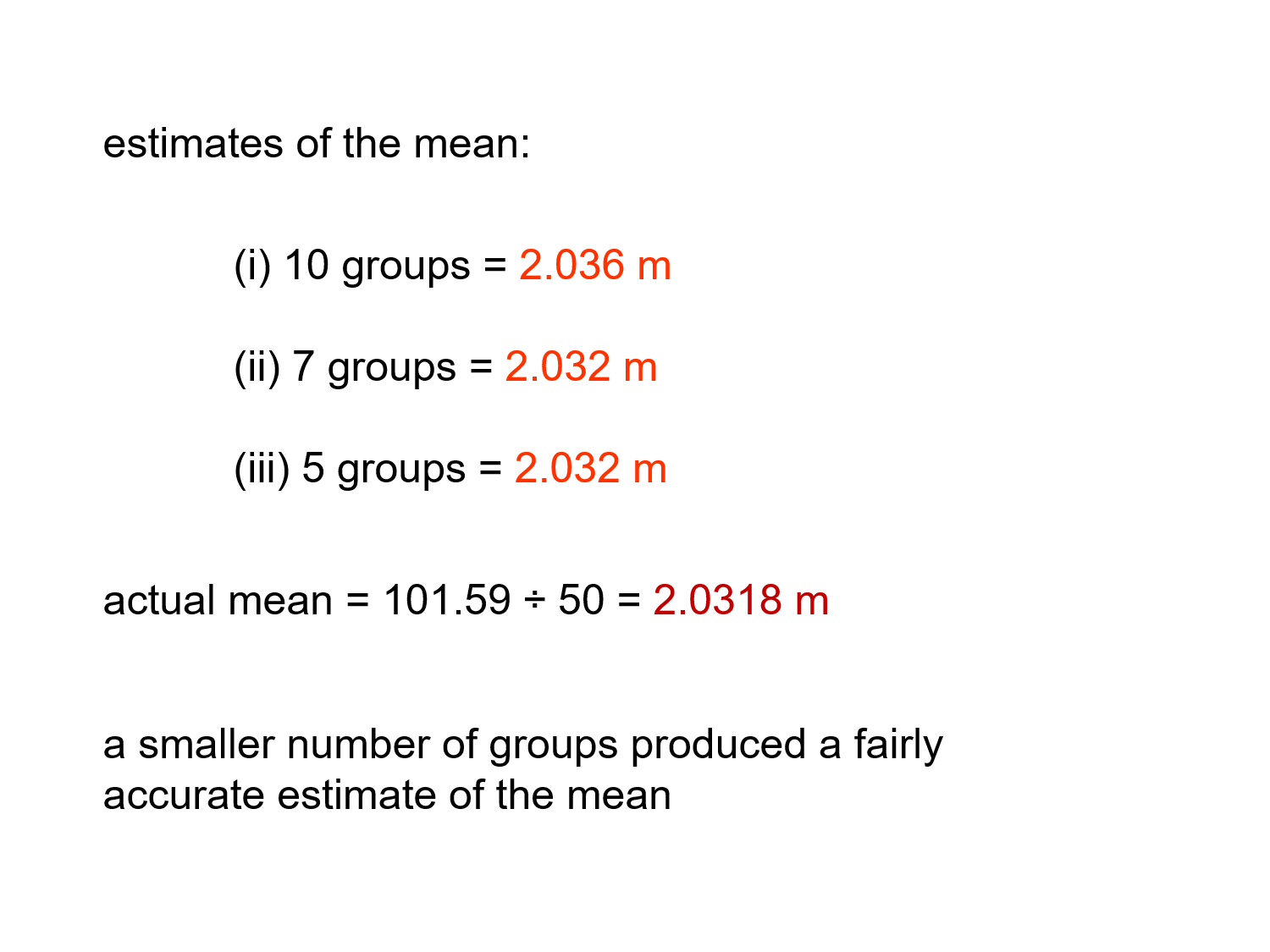
      tomato plant heights

      seeing how estimates of the mean vary for different numbers of groups

      a ppt is here


      helped by the data shape being normal?


      Friday, 26 August 2011

      grid triangle areas


      work based on this idea by
      Threlfall and Pool (2004)


      thanks to axesofsymmetry for creating these geogebra pages for these problems

      Tuesday, 23 August 2011

      fibonacci in nature

      I'm not a huge fan of digging out maths from nature but this is a great little video

      produced by Cristobal Vilo